Pages

Tuesday, January 15, 2013

From Silents to Studio' Golden Years


Movie studios were not prepared to accept sound at first because they felt like it would be a passing fad, would not be liked by audiences, was too expensive to implement everywhere, etc. It became more mainstream when Warner Brothers made the “talkie” The Jazz Singer. It instantly became a major hit, and Warner Bros started to make more sound films. Then most studios followed suit. 


As an immediate effect, many actors were fired as they couldn't fit their voices to the characters they were portraying, and many sound producers went out of business as films only had to have sound recorded one time.

Some of the downsides of the inclusion of sound include scenes being very bland and staying in the same place, as the camera couldn't move without making noise and microphones were usually placed as a prop between two characters, so they would lean over it menacingly. 


The studio years followed this. In this era studios formed a sort of monopoly over film, and shut everyone else out of the industry. On the plus side, nearly everyone could watch a movie, and studios were dedicated to designing well done sets for their films. On the downside, it was hard for people who weren’t part of studio’s to exhibit their films to the public and actors were bound by extremely restrictive contracts.

Outside links: http://cybercollege.com/frtv/frtv003.htm

Sunday, January 13, 2013

Writing About Film


Read something on the Internet the other day. It was an article about writing about film. Here’s the lowdown.

There are 5 main types of film writing: formal analysis, film history, ideological papers, cultural studies, and discussion of the auteur. 


Film analysis concerns breaking down the film to it’s base components and, well, analyzing it. Concepts such as sound design, lighting, composition, and narrative structure are some of the things analysed.


Film history papers are about looking into the production history of the film, the challenges involved, the process of distribution and release, and the reactions of different audiences in different cultures, along with how the film made history in the context of film in general.

Ideological papers focus on analysis of the message the film was trying to give to the audience, and how it did so through the camerawork and sound design.


Cultural studies mainly look into the film’s importance to the culture it was made in. More specifically, how did the culture influence the FILM?

Lastly, discussion of the auteur focuses on the idea that one man and his vision created the film. This type of papers looks into this, and are used to understand broad concepts such as the theme of the film.

In the article, the author uses the phrase “think beyond the frame”. By this, the author means that when watching films we should focus on the things that go on in making it, like who the director was, what the development process was like, the genre, and how the film relates to cultural phenomena.

Saturday, December 1, 2012

Pre-Pro: Bay Area Animal Shelters

Purpose: This piece is intended to inform the audience as to the origins, structure, message, purpose, and future of animal rescue shelters. Or just one.

Contacts: Tammy Alsterlind, Redwood City animal shelter (it’s owner, the workers, perhaps people who are adopting)

Interview Questions:

What does the shelter do? How does it work?
How did the shelter start? Why? Were there any challenges in doing so? If so, what were they and how were they overcome?
What is the ideology (if any) of the shelter?
How do you go about rescuing animals?
What do you plan for the future?  

Shot List: Close-ups of the interviewees, wide shots of the inside of the shelter if possible, shots of the workers, well, working with the animals, establishing shots of the shelter itself, shots of potential adopters meeting animals (if possible). Close ups of the animals themselves in the shelter, being taken care of, sleeping, etc.

General Flow: Beginning: It will start out with a brief description of what the shelter actually does, with shots showing the volunteers (employees?) doing their job. Middle: Then it will move into the history of the shelter, why it was started, who started it (if possible). Then, descriptions of challenges/problems that have to do with their job. End: It will finish off with the workers plans for the future, mentioning how people can get involved, how they work with other shelters.

Monday, November 26, 2012

Capitalism: A Love Story Review

Today I watched a documentary film, Capitalism: A Love Story, directed, produced, and written by Michael Moore. If someone decides to tell me that this wasn't a documentary, well, to that I say, whatever. The subject of the film is the effect of capitalism has on our society, and what Americans have done and can do to stop those in the upper class and government from further worsening America’s situation to their benefit. The film takes a very anti-rich stance in general, and seeks to inspire Americans to fight back and regain what is theirs, whether it is property, wealth, or rights.


The documentary uses a mixture of live-action footage, broadcasts from earlier years, and interview segments to make its point. It is clear in certain live-action segments as well that the reactions from observers and Moore himself are on the spot, enhancing the films legitimacy.


Moore tries to emphasize the situation many middle and lower class Americans are in. This includes shots of people being evicted from their homes, demolished factories, rotting homes, and the homeless.


There isn’t much live footage of the rich that’s meant to evoke a feeling of injustice. This is done in other ways.


There are plenty of voice-overs from Michael Moore himself throughout the film, in order to clarify certain points, present information, and add power to the images shown. Sometimes he speaks on the subject of the shots, other times he comments on reactions, old footage, pictures, etc. in order to give more information than the interviews and live footage provides.


The interviews vary from being very lengthy and drawn out to being shown for only a few quick seconds with the interviewee only commenting on an issue related to the footage shown. This is done to keep the feeling of suspense or drama inherent with the footage. Some of the interviews appear to have been filmed spontaneously, with Moore and his film crew approaching random people around Capitol Hill and Wall Street. Mainly, he interviews people of the working class and those in the government who are disgusted with the situation of the American economy. Moore does this in order to give the audience a perspective on current events and draw out a reaction by interviewing those who have been affected by corporations’ wrongdoing.


One thing I found very unique about this film was the use of old footage from previous decades, old commercials, and videos filmed elsewhere in order to make a point. For example, at one point there is a showing of former president Bush’s address to the people about the upcoming depression, with the backdrop of the white house slowly crumbling and bursting into flame in order to show how he was fear mongering to the American people.

Yup/

Moore uses a variety of interviewing styles when talking to people. Sometimes he is nowhere in the interview, and asks the questions off camera; at some points people are turned away for anonymity, but most show their faces. Other times he is talking to people in a variety of environments, like in front of government buildings, walking along the sidewalk next to an abandoned factory, etc.
He doesn’t seem to compose his shots, at least not for the majority of the film. Only for establishing shots does he put particular attention to positioning of objects. There is little use of focus or any other tool at any point beyond the aforementioned shots.
All in all, I find this film to be very effective in achieving its goal, to inspire those in America to protest against the actions of the upper class and the government. The use of humor, a variety of interviewees, old footage and speeches, comparisons to older times and situations, along with a choice of music meant to instill sadness, is perfect in doing so.

Thursday, October 4, 2012

Another Random Post


3. Soviet Montage and Formalism

  1. Constructive editing was Pudovkin’s idea that it is the way the shots are put together is what gives meaning to a film. According to his ideas, the shots themselves do not matter. In addition, long shots were too realistic, and close ups, symbols, etc. were what really gave viewers understanding.
  2. The Kuleshov effect is the idea that it is the position of shots in a film that gives us the emotion inherent in a film.
  3. An Eisenstein Montage is a set of shots containing images that severely contrast one another in order to give it more emotional punch. Take the film “Odessa Steps” there is great deal of clashing color (well, just black and white) that suddenly switches shot to shot, giving it a very exciting feeling. This is also coupled with the amount of action in each shot, going from slow to fast instantly. 

Like this.


4. Andre Bazin and the Tradition of Realism

a. Bazin believed that those who edited shots were manipulating the meaning for their own reasons, and ignored the impact of realistic shots. He was also critical of the sole use of montages, insisting that there was more to film making then that one technique. The classical version of cutting took away from a viewer being able to interpret the film for his/herself. 
b. Realists strive to make works that allow the film goer to get their own meaning from the shots, and keep the continuity of real life, that it brought its own meaning as well without the need for editing.
c. Realist techniques include the use of long shots, lengthy scenes, in general moving the camera around instead of editing shots together. 

Tuesday, October 2, 2012

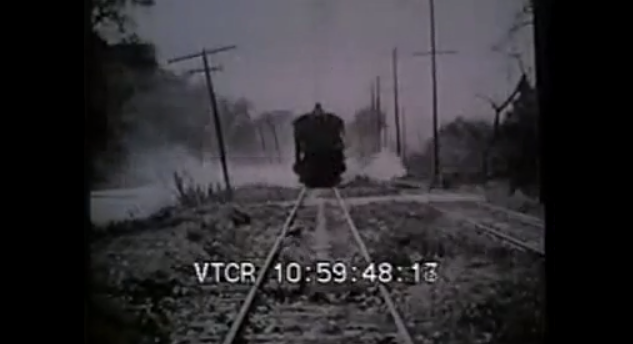
Analysis of "Arrival of a Train" and "Damsel in Distress"


Alright, so my assignment for today is to compare two short films and the style of film making involved in making them. These films are “Arrival of a Train” and “Damsel in Distress”. Both of these were made in the time where everything was funny, and everyone dressed way too heavily for the weather. But enough bad jokes, here comes the analysis of the two.

1. “Arrival of a Train” is shot from an angle that allows the viewer a good view of everything going on along the platform. This angle does not change, and there is no movement, so no one character is focused on and you are treated to a look at everyone at once. Captures the hustle and bustle of a train station very well this way. In “Damsel in Distress”, there is not much movement within shots, but the angles do change between them. Composition varies greatly between shots, compared to the “Arrival of a Train” where nothing changes camera-wise.


2. “Arrival of a Train” has no editing done to it, so it is just one long continuous shot. This makes us focus on the scene as a whole rather then on one specific character. However, everything going on in the shot is relevant to the plot (which is pretty much the title of the short film). The differences between the nonexistent editing in this film compared to “Damsel in Distress” are, well, drastic. In that film the plot is carried by parallel action, with the shots alternating between the woman and the dog. There are also a lot of associative cuts, where the dog’s actions are shown in relation to the woman’s position, showing us how it is affecting the situation and how its actions matter.


3. In “Arrival of a Train” you see the plot through just one view, with no specific character and no goal other than showcasing the train arriving and the reaction of those around it. Time is continuous and so is the setting. In “Damsel in Distress” there are set characters, a set obstacle/goal (the saving of the woman and the train/inability for her to escape), a suspenseful mood (the speed of the shots along with the constant alternating between train and character)…every theme is showcased in this film, compared to the first film where you only have a limited amount of information and no real plot. 

Monday, October 1, 2012

Step Outline


Character is at school, walking around in a suit with a silly gait, trying to attract attention but not getting the kind he’s looking for. He’s unaware of this.Meet [generic name that makes you immediately think “who”], a kid who dresses in old fashion a lot and tries to act a gentlemen, for as of yet unknown reasons.
Scenes showing him with his friends for the first time, who tell him how stupid he looked (in a joking way, but also being honest). He responds with stubbornness. Alright that’s not specific, but we get the impression that he really doesn't know how he looks to others. We don’t know exactly why still. Implies he’s been at this for a while.
He’s in class, he talks in a very refined accent but he doesn't look like he’s pulling it off, he gets snickers from those around him.Closer look at what he tries to do at school, still not a very good idea of why he does this other than to supposedly look cool (without succeeding)
Cut to him at home, his room has a lot of 50’s paraphernalia and propaganda, wallpapers. Clothing in closet is mostly older clothing. Newer clothing is tucked in the back.We now where he is influenced to do what he does. He is going through a phase where he is obsessed with the old days of dressing in suits every day, and where everyone looks and acts perfectly.
Back to school. Lunch time. He looks around at the lunch area, looks disgusted/non interested. Focus on others clothing.We learn where his interests are directed. He treats other peoples’ dressing with disdain or at least disinterest, but we are still unsure.
Another scene of him with his friends. He’s discussing his dislike of other’s clothing, how unattractive it is, how rude people are, etc. His friends tell him to cool down, that’s the way it is, people will move on to another way of acting, he can’t start something.Man this is long. This brings out the goal and obstacle. His goal is to get people to dress like him, act like him. He’s trying to impose his views on others. Obstacle: his own awkwardness and the fact that it takes a lot of effort to get something new in style. Not the way he’s doing it.
He reflects on his actions in a corridor, realizes what he’s been doing. Guy comes by and emphasizes this (http://www.youtube.com/watch?v=IRsPheErBj8) EPIPHANY. SADNESS.This is discovery. He finds out the truth of just how unsuccessful he’s been. He hasn't abandoned his goal but he sure as hell is questioning it. We don’t know how he will succeed, if at all. The climax.
Then, suddenly, interesting individuals! He comes upon others of his kind, who have had similar experiences. Mainly though, they want help organizing. One of them suggests an idea.I know, it sounds a bit like a deus ex machina. But this is the solution, the final push. And it shows a slow going up from the pit he was in before. But here’s another unknown, we don’t know what they have in mind.
Then we have the group of suit aficionados going up to a teacher in charge of clubs. It’s unexpected. It’s revolutionary. It is...THE GENTLEMEN’S CLUB.Oh my god I’m sorry I had to do this. It leaves a lot of ambiguity as to what will happen but we know the main character is satisfied with what he has accomplished. FIN.